Kitchen Remodel Carlsbad, CA
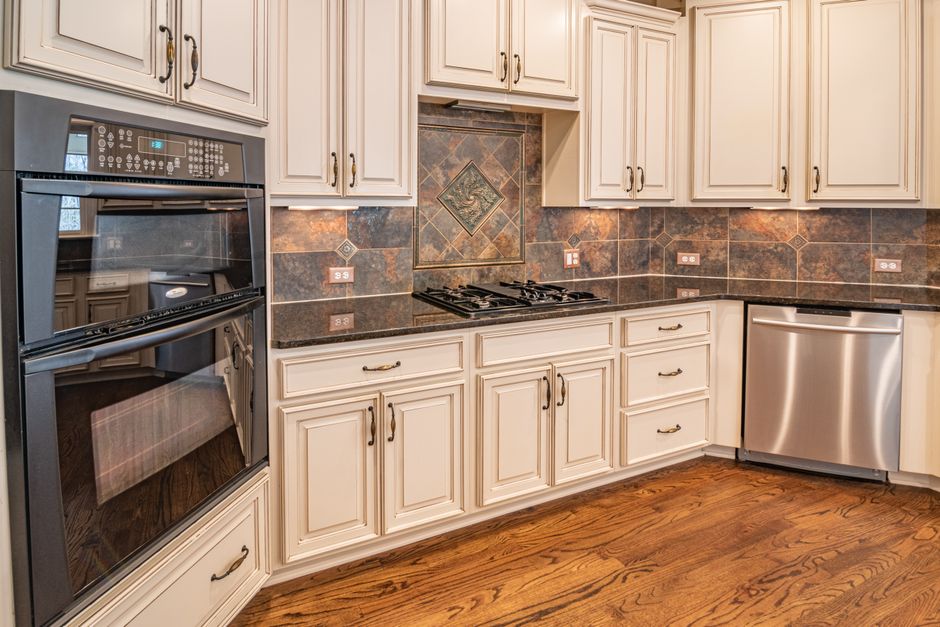
Jobsite notes on kitchen remodeling in Carlsbad, CA: finishes, lighting, flooring and wiring for homes near the coast.
What We Cover
- Which Cabinet Finishes Hold Up Near the Carlsbad Coast How salt air and marine humidity near Carlsbad affect cabinet finishes, hardware and door materials.
- How to Judge a Kitchen Remodeling Crew Before Work Starts What to look at in a license, a written scope and a jobsite so you know who is doing the work in your Carlsbad kitchen.
- Choosing Kitchen Flooring for a Home Near the Beach What to weigh in kitchen flooring when sand, wet feet and slab-on-grade construction are part of daily life in Carlsbad.
- Planning Kitchen Lighting When Coastal Daylight Does Half the Work How to layer task, ambient and accent lighting in a Carlsbad kitchen that already gets strong marine-layer daylight.
- Electrical Surprises in Older Carlsbad Kitchens Why kitchens in older Carlsbad homes often need new circuits, and how the electrical work is staged during a remodel.
- What Happens in the First Week of a Kitchen Tear-Out The order of demolition, rough-in inspections and temporary kitchen setup for a typical Carlsbad remodel.
Kitchen Remodel Carlsbad, CA
A kitchen remodel in Carlsbad starts with the room as it stands: where the light comes in, how the layout moves a cook between sink, range and fridge, and what sits behind the walls. Most homes here are within a short drive of Carlsbad State Beach, so the finishes and fixtures chosen have to live with salt air and a steady layer of sand.
Layout and the work behind the walls
The layout decides everything else. Moving a sink or an island means new plumbing rough-in, and moving a range means a new circuit and a new route for the range hood duct. Crews that open the walls first can confirm what is there before the cabinet order is final. Older homes in La Costa and the village often hold wiring and drain lines that no longer suit a modern kitchen.
Finishes and flooring for coastal light
Coastal daylight changes through the day. The marine layer keeps mornings flat and gray, and afternoons can bring hard sun across a counter. That affects the sheen of cabinet doors, the choice of backsplash, and the color of the lighting plan. Flooring takes the abuse of sand and wet feet, and a slab on grade sets the limits on what can go down over it.
Lighting, electrical and inspection
Ambient, task and accent lighting each get their own circuit or dimmer, planned at rough-in. Counter outlets, the dishwasher, the disposal and the range each need proper circuits, and the work is inspected before drywall closes. The same sequence applies whether the house sits near Batiquitos Lagoon, Agua Hedionda Lagoon or Buena Vista Lagoon, or inland in San Diego County.
Guides
The pages here cover cabinet finishes for salt air, lighting for a bright coastal kitchen, flooring over a slab near the beach, the first week of a tear-out, wiring in older Carlsbad houses and how to judge a remodeling crew. Each one is written from the jobsite side.
Latest Guides
Backsplash and Counter Choices for a Kitchen With Strong Coastal Light
2026-10-06
Stand in a Carlsbad kitchen at eight in the morning and again at four in the afternoon and the room is two different places. The marine layer flattens the sky into a soft gray for the first half of the day, and then the sun drops toward the Pacific and throws hard, low light across every counter and backsplash in the house. A surface that looks calm in the showroom can look streaked, glaring or muddy once it is installed in that light. Choosing counters and backsplash for a coastal kitchen is mostly a matter of testing samples against the real daylight in the real room.
How does coastal daylight change what a counter looks like?
Diffuse gray light hides texture and flattens color. A warm beige quartz can look almost colorless at breakfast, and a pale gray can turn cold. Direct afternoon sun does the opposite: it rakes across the surface and shows every trowel mark in grout, every ripple in a polished edge and every fingerprint on a glossy finish. Homes close to Carlsbad State Beach get the strongest version of this, because the open horizon lets the low sun reach deep into the house. Homes in La Costa, set back among hills and trees, get softer and more broken light.
The practical step is to carry full-size samples, not chips, and set them on the existing counter at three times of day. Tape them to the wall where the backsplash will go. Look at them with the under-cabinet lights on and off. A sample that holds up in all of those conditions is the one to order.
Which counter finishes handle glare best?
Finish matters more than color when the light is harsh. A polished surface reflects the window and the fixtures, and on a long run of counter the reflection can be bright enough to make a cook squint. Honed and leathered finishes scatter the light, and a honed counter reads as quieter and deeper in color. The tradeoff is care: honed stone and some honed quartz show oil and water rings sooner and need wiping more often.
The table below sets out how the common choices behave in a bright coastal kitchen.
Surface In bright afternoon sun In gray morning light Care notes Polished quartz Strong reflection, shows smears Looks clean and even Wipe daily, resists stains well Honed quartz Soft glow, little glare Can look flat Shows oil rings sooner Polished granite Flecks sparkle, some glare Looks deep and varied Needs periodic sealing Honed or leathered granite Muted, hides marks Looks darker Seal more often near the sink Marble Beautiful veining, etches in sun and acid Soft and pale Etches from citrus and vinegar Butcher block Warm, no glare Warm, a little dim Oiling needed, water at the sink is the risk None of these is the right answer on its own. A kitchen with a large west-facing window usually does better with a honed or leathered surface, and a kitchen that sits in shade most of the day can carry a polished one without trouble.
What backsplash works with strong light?
A backsplash sits at eye level and takes the light head on, so its finish and grout lines show up more than anything else in the room. Glossy tile in a small format throws a hundred little highlights across the wall when sun hits it. A matte or satin ceramic, or a tile with a slightly textured surface, calms the wall down. Large format porcelain with thin grout lines has a similar effect, because there are fewer joints to catch the light.
Handmade or irregular tile is popular near the coast, and it looks good in diffuse light, but the uneven glaze catches low sun in unpredictable ways. It is worth seeing a full sheet mounted on a wall before committing to a whole kitchen of it.
Grout color is its own decision. A grout close to the tile color keeps the wall quiet. A contrasting grout draws a grid across the wall, and afternoon light makes the grid more prominent. Epoxy grout resists staining behind a range, while standard cement grout needs sealing, which is a task that gets skipped in many homes.
Does the view change the choice?
Some kitchens in Carlsbad look toward the water or toward the lagoons. Batiquitos Lagoon, Agua Hedionda Lagoon and Buena Vista Lagoon each put a stretch of open sky and reflective water in front of nearby homes, and that reflected light enters the house from below the usual angle. A glossy counter picks up that bounce and sends it into the ceiling. A kitchen with a view of open water tends to look best with a surface that does not compete with it, which usually means a quiet color and a honed finish.
In a kitchen with no view and a small window, the opposite applies. A little polish and a lighter color can lift the room, and a mirror-finish tile behind the range throws daylight deeper into the space.
How do salt air and sand affect these materials?
Salt in the air settles as a thin film on horizontal surfaces, especially near an open window. On polished stone it shows as haze, and on honed stone it sits in the pores. A mild soap and water wipe handles most of it. Abrasive powders and scrubbing pads scratch polished quartz and dull a honed face, so the cleaning habit is part of the material choice.
Sand tracked in from the beach ends up on the counter more than people expect, carried on hands, bags and pet paws. Dragging a pot across a sandy counter leaves fine scratches, and those scratches show most in strong light. A softer material such as marble or a soft limestone marks faster than quartz or granite. That does not rule them out, but it does mean accepting a patina.
How should the counter and backsplash work together?
The two surfaces should differ in at least one way, either color, pattern or texture, or the wall and the counter blur into one band. When the counter is busy, with heavy veining or flecks, the backsplash should be plain. When the counter is plain, a patterned tile or a vertical stack gives the wall a job. The transition between them, usually a thin caulk line, should be planned: it needs to flex, so it is a color-matched flexible sealant and not grout.
The height of the backsplash is another choice. A tile that runs only four inches above the counter leaves paint exposed to splashes. A full-height tile wall behind the range and sink reads as deliberate and protects the drywall, and it makes wipe-down easier in a house where salt and cooking steam add up.
What goes wrong most often?
Several mistakes repeat across kitchens in San Diego County. Samples get chosen under store lights and never checked at home. A glossy counter is paired with a glossy backsplash and under-cabinet strips with no diffuser, and the result is a wall of glare. Seams in a long counter fall under a window where afternoon light rakes across them. Outlets and switches land in the middle of a tile field instead of on a grout line, which looks careless in side light.
A layout drawn up before the order is placed, showing where each seam, outlet and edge falls, prevents most of these. The tile setter and the countertop fabricator should both see it, and each should sign off on the dimensions.
What is the order of work?
Counters go in first, after the base cabinets are set and leveled. The templating visit happens once the cabinets are fixed, and the fabricator cuts the slabs from those measurements. Backsplash tile follows the counters, so the tile can meet the counter edge cleanly. The last steps are grout, sealing where needed, the flexible sealant at the counter line and the final switch plates.
Light changes through the seasons, and a sample that looks right in October can look different in June. A kitchen that holds up under the low winter sun and the high summer sun is the one that will keep looking right.

Range Hood and Ventilation Questions for Carlsbad Kitchens
2026-10-06
The range hood is the part of a kitchen remodel that gets chosen last and complained about longest. People pick the finish and the shape, and then find out after the drywall is up that the duct has no clear path to the outside, or that the fan is so loud nobody turns it on. In Carlsbad the problem has a coastal twist: damp air, salt and grease all end up on the same surfaces. The questions below are the ones that come up most when a kitchen in this part of San Diego County is opened up.
Does the hood have to vent to the outside?
For a gas range, yes, in almost every case. A recirculating hood only passes the air through a charcoal filter and pushes it back into the room, which removes some smell and grease but none of the moisture or combustion gases. A ducted hood carries all of it out through the wall or roof. The duct path has to be planned before the walls are closed, because a run through a finished ceiling means cutting into it.
A recirculating unit is sometimes the only choice, for example in a condo with no exterior wall on the kitchen. In that case the filters need replacing on schedule, and the kitchen needs a window or a bathroom-style fan elsewhere to move moisture out.
Which way should the duct run?
The shortest, straightest path wins. Every elbow slows the air, and a long run with several bends can cut the airflow of a good fan to a fraction of its rating. Going straight up through the roof is the most efficient route, and going straight back through an exterior wall comes second. A run through the attic with a long horizontal section, common in single-story homes around La Costa, needs sealed joints and sloped sections so grease does not pool.
Smooth rigid metal duct is the standard. Flexible foil duct has ridges that catch grease and restrict the air, and most inspectors and ventilation guides steer crews away from it for hoods. The duct size on the hood outlet should be carried through the entire run, not reduced partway.
How big should the fan be?
The fan should match the range, not the width of the hood alone. A powerful gas range with high output burners needs a stronger fan than a standard electric range or an induction cooktop. Fan strength is rated in cubic feet per minute, and the maker of the range often gives a recommendation. A fan far larger than needed is loud, pulls conditioned air out of the house and can cause its own problems.
Big fans bring up make-up air. When a strong hood pulls air out, the house needs a path for replacement air, or the fan struggles and other appliances can backdraft. Local code may require a make-up air supply when the fan passes a certain strength, and the building department can confirm what applies to a given house.
Why does noise matter so much?
A hood that is too loud to talk over does not get used. Noise is rated in sones, and a lower number is quieter. Sound comes from the fan motor, from the duct and from air rushing through a small opening. A remote or in-line blower, mounted in the attic or on the roof, moves the motor away from the kitchen and keeps the room quiet. Most of the sound that remains is air noise, which comes down when the duct is large and straight.
In a kitchen that opens to the living room, as many homes near Carlsbad State Beach now do, the hood is part of the main living space, and a quiet fan has real value.
How does salt air change the choice?
Hoods near the water see more corrosion than inland ones. Raw steel and cheap plated parts rust at screw heads and seams within a few seasons in homes close to Agua Hedionda Lagoon or the bluffs along the beach. Stainless steel with a good grade holds up better, and painted or coated hoods hold up if the coating is intact at every edge. The exterior vent cap is the most exposed piece, and one with a steel damper flap rusts shut. Aluminum and stainless caps last longer in that air.
The cap also needs a backdraft damper that closes properly, so wind and coastal rain do not blow back down the duct, and a screen that keeps birds and rodents out without clogging with lint.
What about grease and cleaning?
Baffle filters in stainless steel can be washed in the dishwasher and last a long time. Mesh filters trap more grease but clog sooner. Whatever the type, the filters need cleaning on a regular schedule, and a hood that is never cleaned loses airflow and becomes a fire risk. Coastal humidity makes grease stick harder, so cleaning every month or two is a reasonable habit in a kitchen that sees daily cooking.
A hood with a grease trough or drain cup at the bottom of the plenum keeps drips from reaching the cabinet above. Wall-mounted hoods should clear the cabinet by the distance the maker states, and combustible surfaces nearby need the clearances in the installation sheet.
What height should the hood hang?
Most makers publish a range, often between about twenty-four and thirty-six inches above the cooktop, and the right spot within that range depends on the height of the cook and the power of the range. Too low and it blocks the view of the pots and risks heat damage. Too high and it fails to catch the plume. The decision is made before the electrician sets the junction box and the framer adds blocking, so it is a rough-in step, not a finishing one.
Does a hood need its own circuit and a permit?
Many hoods run on a general kitchen lighting or small appliance circuit, and a stronger unit with a remote blower may need its own. Cutting a new duct through the roof or an exterior wall is work that the city of Carlsbad usually reviews, and an inspector looks at the duct path, the cap and the electrical connection before the walls close. The crew should ask about this when the plan is drawn, not when the inspector arrives.
What do the lights in the hood do?
Built-in lights are a minor feature that gets used every day. LED lamps in a hood throw task light on the cooktop, and the color temperature should match the rest of the kitchen so the stove does not look different from the counters. In a coastal kitchen with bright window light, hood lamps help most in the morning and evening when daylight is flat.
A hood with a dimmer for its lamps, or two light levels, is more useful than one with a single bright setting that reflects off a glossy backsplash.
What should be settled before the order is placed?
The range and its fan requirement, the duct route and its exit point, the cabinet or wall behind the hood, the electrical feed and the mounting height all need answers first. With those in hand, the hood can be chosen to suit the kitchen instead of the kitchen being bent around a hood.
A good hood in Carlsbad is quiet, ducted straight outside and built from material that survives salt air. Getting the route right at rough-in is what makes it work.